How to Choose Galvanized Steel Pipe: Size, Zinc Coating and Standard Explained
Galvanized steel pipe is bought on five numbers: outer diameter, wall thickness, zinc coating, grade and standard, and pipe ends. Here is what each one changes, and what to send for a quote.
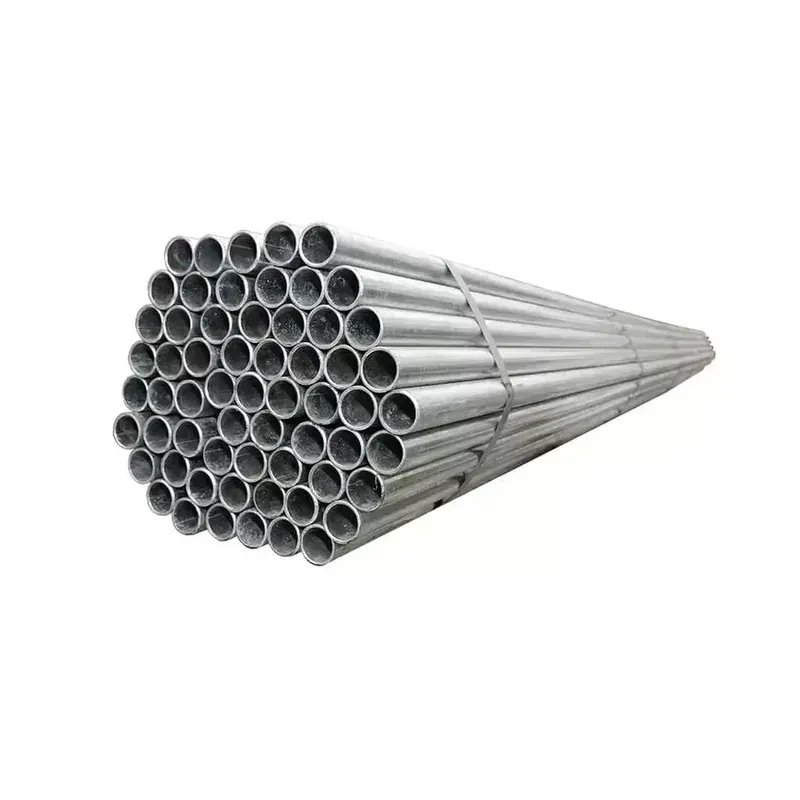
Choosing a galvanized steel pipe (镀锌管) comes down to five decisions: outer diameter, wall thickness, zinc coating, steel grade and standard, and how the pipe ends are finished. Get them right and you have a pipe that resists rust for the service life you planned. Get one wrong and you can see white rust, damaged threads or leaking joints long before the pipe has done its job.
This guide explains what each factor does, the ranges we supply from our mill in Anyang, Henan, and the exact information to send us so you receive a quotation you can compare line by line.
What is a galvanized steel pipe?
A galvanized steel pipe is a carbon steel pipe finished with a zinc coating. The zinc layer is sacrificial: it corrodes before the steel underneath, so a scratch, a cut end or a chipped surface does not immediately become a rust point. That is the reason galvanized pipe is used for outdoor structures, humid buildings, water lines, gas lines and scaffolding, where bare carbon steel would fail quickly.
Galvanized pipe is also called GI pipe (galvanized iron pipe), HDG pipe (hot-dip galvanized pipe) or simply galvanized tube. The names are often used loosely in the trade, so always confirm on the enquiry whether the coating is pre-galvanized or hot-dip galvanized - the difference changes the corrosion life more than any other single word on the datasheet.
Pre-galvanized or hot-dip galvanized?
Pre-galvanized pipe
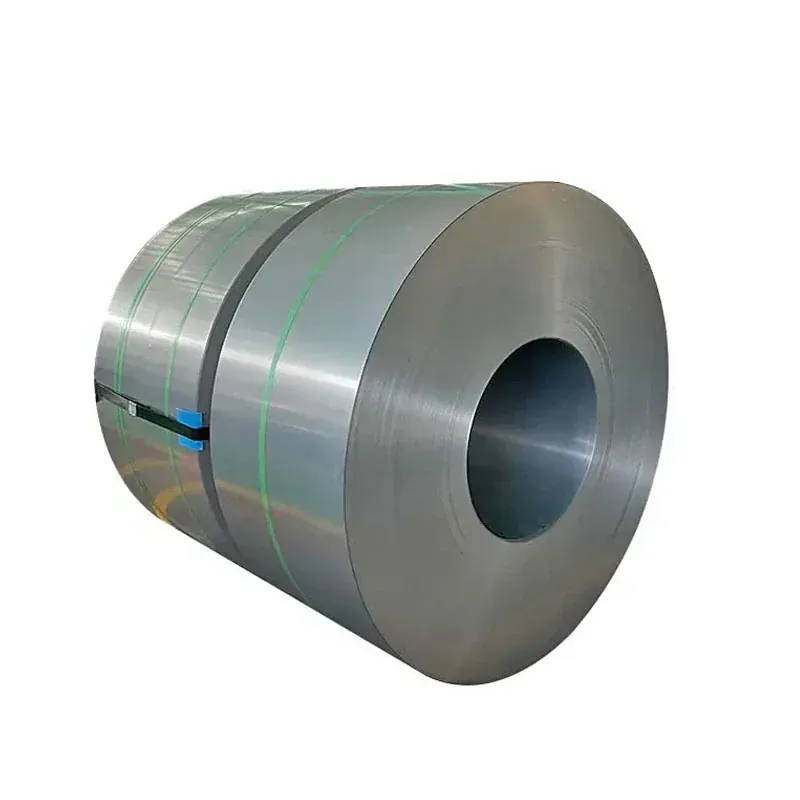
Pre-galvanized pipe starts as galvanized steel strip or coil, and the pipe is formed and welded from that coated strip. Zinc is present before the pipe is made, so the coating is uniform on the outside and inside wall, but the weld seam and the cut ends carry little or no coating. Pre-galvanized pipe is also called pre-GI, and it is the economical choice for indoor frames, greenhouse structures and light-duty applications. We supply pre-galvanized coatings from 5 µm to 25 µm.
Hot-dip galvanized pipe
Hot-dip galvanized pipe is made first and dipped afterwards, so the zinc covers the outside wall, the inside wall, the weld seam and the ends in one continuous layer. The coating is far heavier than a pre-galvanized finish: we supply 35 µm to 200 µm, which is normally written as a zinc coating weight in g/m² on the datasheet. Hot-dip galvanizing is what you specify for outdoor structures, coastal sites, chemical plants, water transmission and any project with a defined service life in a corrosive environment.
The five factors to compare before you buy
1. Outer diameter and nominal size
Galvanized pipe is ordered either by nominal bore (1/2 inch, 3/4 inch, 1 inch and so on) or by actual outside diameter in millimetres. The two are not interchangeable: a 1 inch nominal bore pipe does not measure 25.4 mm on the outside. If the pipe has to fit an existing thread, a coupling, a socket or a clamp, quote the outside diameter in millimetres as well as the nominal size, and say what it must connect to.
Our standard range runs from 1/2 inch to 8 inch, or OD 21.3 mm to OD 219 mm.
2. Wall thickness
Wall thickness decides pressure rating, weight and how much thread depth you can cut. Two suppliers can both quote "2 inch galvanized pipe" and deliver pipes with very different walls, so buy on wall thickness, not on nominal size alone. We supply wall thickness from 0.8 mm to 25 mm.
Thin walls are economical for frames, fencing and light structures. Thicker walls are needed for pressure service, structural scaffolding, piling and any application where the joint is threaded rather than welded.
3. Zinc coating
Zinc coating is the single biggest driver of how long a galvanized pipe lasts outdoors. It is quoted in micrometres (µm) of coating or, more commonly in export markets, as a coating weight in g/m².
- Indoor and dry inland use - a light pre-galvanized coating is usually enough, provided cut ends are touched up.
- General outdoor and water transmission - specify hot-dip galvanized coating; this is the range most specifications call out.
- Coastal, humid, industrial or chemical environments - specify the heaviest coating you can justify, and confirm whether the inside wall is coated as well as the outside.
One practical point: heavy zinc coating is not the same as a zinc-rich paint. A painted finish looks similar when new, but it does not provide the same sacrificial protection at cut ends and damaged areas.
4. Steel grade and standard
The grade describes the mechanical properties of the base steel, and the standard describes the whole specification: dimensions, tolerances, test requirements and marking. Both must appear in your enquiry.
We produce galvanized pipe to ASTM A53, BS1387-1985, GB/T3091-2001, EN39 and BS1139, in grades Q235, Q345, S235JR, S275JR, STK400, STK500, S355JR and GR.B-D. Low-carbon grades such as Q235 and S235JR are used for water and gas lines and general structures; higher-strength grades are used for scaffolding, structural frames and load-bearing duties.
Ask for the standard on the mill certificate, not only in the conversation. A quotation that says "ASTM or BS" is not a specification.
5. Pipe ends and surface finish
How the pipe is finished at the ends decides how much work you do on site. Options we supply include plain ends, bevelled ends, and threaded ends with couplings or sockets. Plastic caps and steel rings can be supplied where the pipe is packed for sea freight.
If threads are required, say whether they must match BSP, NPT or another standard, and whether the pipe is for gas, water or structure - the thread form and the sealing method are different, and a mismatched thread is a leak waiting to happen.
Matching the pipe to the application
Before comparing prices, write down the application and the environment. Those two answers narrow the specification faster than anything else:
- Water supply and water transmission - hot-dip galvanized, mid to heavy zinc coating, threaded and coupled ends, standard grades to ASTM A53 or BS1387.
- Gas lines - confirm the thread standard, the pressure rating and the coating requirement before choosing on diameter alone.
- Construction and structural frames - heavier wall, structural grade, and a clear decision on welded versus threaded joints.
- Scaffolding - specified by standard and wall thickness, not by nominal bore; EN39 and BS1139 are common references.
- Greenhouses and agricultural frames - light wall, pre-galvanized or light hot-dip coating, and a coating that tolerates condensation on the inside wall.
- Fencing and general fabrication - pre-galvanized pipe, with cut ends protected on site.
Common mistakes we see in galvanized pipe enquiries
- Quoting a nominal size without the outside diameter, then finding the pipe will not match the existing coupling.
- Comparing on price per metre when the wall thickness is different - the cheaper offer usually has the thinner wall.
- Specifying "galvanized" without saying pre-galvanized or hot-dip galvanized, so two quotations describe two different products.
- Forgetting the inside wall. On water pipe it is the inside that carries the water and corrodes first if the coating stops at the outside.
- Leaving cut ends and field welds bare on an outdoor structure, then blaming the coating when rust appears at the joints.
- Mixing pipe standards on one project - for example ASTM A53 pipe with EN39 scaffolding - and finding the dimensions are not interchangeable.
Frequently asked questions
Is galvanized steel pipe suitable for drinking water?
Hot-dip galvanized pipe has been used for potable water lines for decades and is still accepted in many markets. Whether it is allowed on your project depends on your local drinking-water regulation and on the water chemistry: soft or acidic water attacks zinc faster than hard, neutral water. Tell us the application and destination country and we will confirm the coating and standard that are normally accepted there.
How long does galvanized steel pipe last outdoors?
Service life is controlled by the zinc coating weight and by the environment, not by the word "galvanized" alone. A light pre-galvanized coating in a dry inland climate and a heavy hot-dip coating on a coastal site are two different products with very different lives. Send us the installation environment and the service life you are planning for, and we will recommend a coating weight to start from.
Can you supply cut, threaded and coupled pipe?
Yes. We supply plain, bevelled and threaded ends, with couplings or sockets, and can add plastic caps and steel rings for packing. If the pipe is threaded, tell us the thread standard and whether a sealant or tape will be used on site.
What is the difference between a galvanized steel pipe and a galvanized steel tube?
In export trade the two words are used interchangeably, but the underlying standards are not. Pipe standards (ASTM A53, BS1387) define nominal bore and pressure service; tube standards define outside diameter and wall for structural, mechanical and greenhouse applications. If your drawing gives an outside diameter and wall thickness, quote both, and say what the part has to do.
What to send us for a fast, accurate quotation
- Application and environment (water, gas, structure, scaffolding, greenhouse; coastal, inland, industrial or indoor).
- Standard and steel grade, or the mechanical properties you need.
- Outside diameter in millimetres and nominal size, if both are known.
- Wall thickness, or the pressure and load the pipe has to carry.
- Pre-galvanized or hot-dip galvanized, with the coating thickness or zinc coating weight.
- Pipe ends: plain, bevelled or threaded, and the thread standard if applicable.
- Length, quantity in tonnes or metres, packing requirement and destination port.
Next step
Send these details to Anyang Yehui Steel Company and we will come back with a specification you can compare line by line:
- Browse our galvanized steel pipe for gas lines and the wider galvanized steel product range.
- Compare the hot dipped galvanized steel pipe supplied to ASTM, BS and EN standards, or BS1387 galvanized pipe for water and gas lines.
- The coil side of the same material family is covered in our galvanized steel coil buying guide.
- Contact our sales team with your specification - most enquiries receive a detailed quotation within 24 hours by email, WhatsApp or WeChat.